







An account executive, often shortened to AE, is the salesperson who turns interested prospects into paying customers. In most B2B companies, the AE runs discovery calls and demos, builds proposals, negotiates terms, and closes deals, and is measured against a revenue quota.
Quick answer: An account executive is a quota-carrying sales professional who manages deals from first qualified meeting to signed contract. PayScale puts the average US account executive base salary at about $70,900, with total pay of roughly $49,000 to $137,000 once commission is included. In tech sales, RepVue's data shows median on-target earnings from about $130,000 for SMB AEs to $260,000 for enterprise AEs.
What Is an Account Executive?
An account executive is a sales professional responsible for closing new business. In a typical B2B sales team, marketing and sales development reps generate and qualify leads, the AE turns those leads into signed customers, and account managers or customer success teams look after the customer afterward.

Account executive meaning
The title "account executive" is used in several industries, which is why the meaning can vary:
- B2B sales (most common today): a quota-carrying seller in software, IT services, BPO, logistics, or other business services. This is what most people mean by "AE sales."
- Advertising and media: the person who manages client campaigns and relationships at an agency, or sells ad space at a media company.
- Financial services: older usage for a broker or advisor who manages client accounts.
- Customer service: in some regions, including Pakistan and India, "customer account executive" is also used for customer support roles, often on night shifts serving international clients.
This guide focuses on the B2B sales meaning.
Where the AE fits in the sales team
Marketing → creates interest and inbound leads
SDR / BDR → prospects and qualifies, books meetings
Account executive → discovery, demo, proposal, negotiation, close
Account manager / → onboarding, retention, renewal, upsell
customer success
If you're new to these roles, Prime BPO's guides to what an SDR does, SDR vs BDR, and the business development representative role explain the steps that come before the AE.

What does an account executive do?
An account executive manages deals through the full sales cycle. They run discovery calls to understand a prospect's needs, present or demo the product, write proposals, handle objections, negotiate pricing and contract terms, and close the deal. They keep their pipeline updated in a CRM, forecast expected revenue, and hand new customers over to the team that will support them. In smaller companies, AEs may also prospect for their own leads.
Note: The words "executive" and "account" can make the job sound senior, but an AE is usually an individual contributor, not a manager. Many AEs move into sales leadership later in their careers.
Get Free Quotes
Customized Options Await
Account Executive Job Description and Duties
The core account executive job duties follow the sales cycle: qualify the opportunity, understand the buyer's problem, show how your product solves it, agree on terms, and close. Around that, AEs manage their pipeline, forecast revenue, and work with other teams to win and hand over deals.
The sales cycle an AE manages
|
Stage |
What the AE does |
Typical outcome |
|
Qualification |
Confirms the prospect has a real need, budget, authority, and timeline |
A qualified opportunity in the CRM |
|
Discovery |
Asks questions about goals, current process, pain points, and decision makers |
A clear picture of what the buyer needs |
|
Demo or presentation |
Shows how the product or service addresses those needs |
The buyer sees the value |
|
Proposal |
Builds pricing, scope, and a business case |
A written proposal |
|
Negotiation |
Handles objections, pricing discussions, procurement, and legal review |
Agreed terms |
|
Close |
Gets the contract signed |
Closed-won revenue |
|
Handoff |
Passes the customer to onboarding, account management, or customer success |
A smooth start for the customer |





































Daily tasks
A typical day might include:
- Running two to four discovery calls or demos
- Following up on open proposals and answering buyer questions
- Updating deal stages, next steps, and close dates in Salesforce or HubSpot
- Preparing pricing and proposals, sometimes with a sales engineer or manager
- Meeting with legal or finance on contract terms for late-stage deals
- Prospecting into target accounts, especially at smaller companies
- Weekly pipeline and forecast reviews with a sales manager
Pipeline management and CRM hygiene
Sales managers rely on AEs' CRM records to forecast revenue. Good pipeline management means every opportunity has an accurate stage, deal value, close date, and next step, and deals that have stalled are updated or closed out rather than left open. Clean records also help the account manager or customer success team after the sale.
Discovery and solution selling
Strong AEs spend more time asking than presenting. Discovery calls uncover the buyer's goals, what happens if they do nothing, who else is involved in the decision, and how they'll measure success. That information shapes a tailored presentation rather than a generic pitch.
Negotiation, procurement, and closing
Larger deals often involve procurement teams, security reviews, legal redlines on a master services agreement (MSA), and approval from several executives. AEs coordinate these steps, keep the deal moving, and decide with their managers when to offer discounts or flexible terms.
Account executive skills and qualifications
Most AE job postings ask for:
- One to three years of sales experience, often as an SDR or BDR, for entry-level AE roles
- A track record of meeting sales targets and quotas
- Strong presentation, listening, and negotiation skills
- CRM experience, usually Salesforce or HubSpot
- Comfort with video calls, email, and phone outreach
- A bachelor's degree, often preferred but not always required
Note: Prime BPO's guides to cold calling scripts and sales strategy cover skills many AEs still use for prospecting and planning their territory.
Types of Account Executives: From Associate to Strategic
Account executive roles are usually split by the size of customer they sell to. Associate and SMB AEs handle many smaller, faster deals, mid-market AEs sell to medium-size businesses, and enterprise and strategic AEs manage a few large, complex deals with long sales cycles. Pay rises with each step.
Associate account executive
An associate account executive is an entry-level AE, often promoted from an SDR or BDR role. They usually close smaller deals, sometimes with a manager's support, and may still do some prospecting. It's a training ground for a full AE role.
SMB account executive
SMB (small and midsize business) AEs sell to smaller companies. Deals are smaller and close faster, sometimes in a few weeks, so success depends on volume, pace, and running efficient calls.
Mid-market account executive
Mid-market AEs sell to medium-size companies, where deals involve more stakeholders and a longer evaluation. They balance volume with more tailored selling.
Enterprise account executive
Enterprise AEs sell to large organizations. Deals are larger, involve procurement, legal, and security reviews, and can take many months to close. Enterprise AEs often work with sales engineers, executives, and partners on each deal.
Strategic account executive
Strategic AEs focus on a small number of the company's largest or most important accounts, often aiming for multi-year, multi-department deals. These roles usually require years of enterprise experience.
How the levels compare
|
AE level |
Typical customers |
Deal size and cycle |
Main focus |
Median OTE (RepVue, tech sales) |
|
Associate AE |
Smaller accounts |
Small deals, short cycles |
Learning to close |
Not published |
|
SMB AE |
Small businesses |
Smaller deals, weeks to a few months |
Volume and speed |
$130,000 |
|
Mid-market AE |
Medium-size businesses |
Mid-size deals, a few months |
Tailored solutions, several stakeholders |
$175,000 |
|
Enterprise AE |
Large organizations |
Large deals, often many months |
Complex buying committees, procurement |
$260,000 |
|
Strategic AE |
A few major accounts |
Largest deals, long cycles |
Long-term, multi-year relationships |
Not published |
Deal sizes and cycle lengths vary widely by industry and product, so these are general patterns. The OTE figures are RepVue medians, which come largely from technology sales, and are higher than typical pay across all industries.

Get Free Quotes
Customized Options Await
Account Executive vs. Account Manager
The simplest way to separate the two roles: an account executive wins new customers, and an account manager keeps and grows existing ones. AEs are often called "hunters" and account managers "farmers," though many companies blend the roles.
What the AE focuses on
- Winning new logos, meaning brand-new customers
- Running the sales cycle from discovery to signed contract
- Hitting a new-business revenue quota
- Handing customers over cleanly after the sale
What the account manager focuses on
- Building long-term relationships with existing customers
- Customer retention and renewals
- Upselling and cross-selling additional products or services
- Resolving issues and making sure the customer gets value
Prime BPO's comparison of relationship managers and business development managers covers a similar split between growth and relationship roles.
Side-by-side comparison
|
Dimension |
Account executive |
Account manager |
|
Main goal |
New business |
Retention and growth of existing accounts |
|
Customers |
Prospects and new customers |
Existing customers |
|
Typical metrics |
New revenue, win rate, quota attainment |
Renewal rate, net revenue retention, upsell revenue |
|
Pay structure |
Larger share of pay from commission |
More base salary, smaller variable share |
|
Sales motion |
Discovery, demos, negotiation |
Business reviews, renewals, expansion |
|
Average US base pay (PayScale, 2026) |
About $70,900 |
About $67,200 |
|
Total pay range (PayScale) |
About $49,000 to $137,000 |
About $46,000 to $105,000 |
Why the distinction matters for job seekers
If you enjoy the challenge of winning new business and are comfortable with commission-heavy pay, the AE role suits you. If you prefer steady relationships, problem-solving, and a more predictable income, account management may be the better fit. Read job descriptions closely, because some companies use "account executive" for roles that are really account management, and some AEs manage renewals too.
Account Executive Salary and OTE (2026)
Account executives earn a base salary plus commission, and the total they'd earn by hitting quota is called on-target earnings (OTE). Across all US industries, PayScale puts average AE base pay at about $70,900. In technology sales, where pay is highest, RepVue's medians run from $70,000 base and $130,000 OTE for SMB AEs to $130,000 base and $260,000 OTE for enterprise AEs.
How much do account executives make?
|
Source and role |
Base salary |
Total pay or OTE |
|
PayScale, account executive (all industries, Oct 2026) |
$70,902 average; most between $47,000 and $117,000 |
$49,000 to $137,000 total pay |
|
PayScale, senior account executive (Oct 2026) |
$82,963 average; most between $60,000 and $135,000 |
$64,000 to $168,000 total pay |
|
RepVue, SMB AE (tech sales, Dec 2025) |
$70,000 median |
$130,000 median OTE |
|
RepVue, mid-market AE (tech sales, Dec 2025) |
$90,000 median |
$175,000 median OTE |
|
RepVue, enterprise AE (tech sales, Feb 2025) |
$130,000 median |
$260,000 median OTE |
|
BLS, sales reps for technical and scientific products (May 2025) |
$104,920 median annual pay |
Includes commission |
|
BLS, other wholesale and manufacturing sales reps (May 2025) |
$72,080 median annual pay |
Includes commission |
PayScale reports commission for AEs of about $3,000 to $65,000 a year, and for senior AEs about $11,000 to $75,000. RepVue's tech-sales figures are self-reported by sellers, so they lean toward software and higher-paying companies.
Understanding OTE
OTE is base salary plus the commission you'd earn at 100% of quota. Many AE plans split OTE roughly 50/50 between base and variable pay, and RepVue's medians imply a split of about 50% to 54% base. Here's a hypothetical example:
Base salary: $70,000
Target commission: $60,000 at 100% of quota
OTE: $130,000
At 80% of quota: $70,000 + (80% × $60,000) = $118,000
At 120% of quota: depends on accelerators; often higher than $142,000

Commission plan terms to understand
- Quota: the revenue target for a month, quarter, or year.
- Accelerators: a higher commission rate on deals above quota.
- Decelerators or thresholds: lower or no commission until you reach a minimum percentage of quota.
- SPIFFs: short-term bonuses for specific products or goals.
- Clawbacks: commission that must be repaid if a customer cancels early.
- Ramp period: a reduced quota or guaranteed commission while new AEs build their pipeline.
Remote and night-shift account executive jobs
Remote account executive jobs are common, especially in software and B2B services, because most selling now happens over video and phone. Expect regular video calls, a strong home internet connection, and CRM-based reporting.
In countries such as Pakistan and India, many sales and customer account executive jobs serve US or European clients, so they run on night shifts aligned with those time zones. Pay and titles vary a lot between employers: some "account executive" roles are full-cycle B2B sales, while others are phone sales or customer service. Read the job description to see whether the role carries a revenue quota and commission.
Note: Ask for the commission plan in writing before accepting an offer, including quota, how commission is calculated, when it's paid, and what happens if a customer cancels.
Account Executive Resume and Interview Guide
Hiring managers want proof you can close: quota attainment, deal sizes, win rates, and the tools you used. A strong AE resume leads with numbers, and a strong interview shows you can run a real sales conversation, often through a mock discovery call or demo.
Account executive resume tips
- Lead with results: quota attainment percentage, revenue closed, average deal size, and win rate.
- Show progression: SDR to associate AE to AE, or promotions within a team.
- Name your tools: Salesforce, HubSpot, Outreach, Gong, LinkedIn Sales Navigator, or similar.
- Describe your market: SMB, mid-market, or enterprise; industry; typical buyer titles.
- Keep it to one page unless you have many years of relevant experience.
Account executive resume keywords
Use the terms that appear in the job posting, where they're true for you. Common ones include: full-cycle sales, B2B sales, quota attainment, pipeline management, prospecting, discovery calls, product demos, contract negotiation, client acquisition, account management, CRM, forecasting, upselling, cross-selling, and stakeholder management.
Sample resume bullets
The examples below are illustrations, not real results. Replace them with your own numbers.
- Closed $1.2M in new annual recurring revenue in FY2025, 118% of quota
• Managed a pipeline of 40+ mid-market opportunities in Salesforce
• Increased win rate from 18% to 26% by introducing structured discovery
• Promoted from SDR to Account Executive after 14 months
Common account executive interview questions
- Walk me through a deal you closed from first call to signature.
- How do you run a discovery call? What questions do you ask?
- Tell me about a deal you lost. What would you do differently?
- How do you handle a prospect who says your price is too high?
- How do you manage your pipeline and forecast accurately?
- What was your quota last year, and how did you perform against it?
- Sell me this product (or a common object).
Use the STAR method (situation, task, action, result) for behavioral questions, and bring real numbers. Many companies also run a mock discovery call or demo; prepare by researching the company's product and ideal customer.
Is being an account executive a hard job?
It can be. AEs carry a revenue quota, deal with rejection and lost deals, and see their income rise and fall with results. Long enterprise sales cycles can also be frustrating. The people who do well usually enjoy competition, stay organized, and can learn from losses without taking them personally. For those who thrive, the earning potential and career growth make it worthwhile.
Building a Sales Career: The Path to Account Executive
Most account executives start in a prospecting or phone sales role, prove they can hit targets, and then move into closing full deals. The path usually runs from SDR or BDR to associate AE, then AE, senior AE, and enterprise or strategic AE, with sales management as another option.
A typical career path
SDR / BDR or phone sales role
↓
Associate or SMB account executive
↓
Mid-market account executive
↓
Senior or enterprise account executive
↓
Strategic AE, sales manager, or director of sales
Is an account executive a high position?
It's a mid-level role in most sales organizations: above SDRs and BDRs, and below sales managers and directors. It isn't a management role, but it carries real responsibility for revenue, and senior and enterprise AEs can earn more than many managers. The role also gives regular exposure to customers' senior leaders, which helps people move into leadership later.
Sales roles at Prime BPO
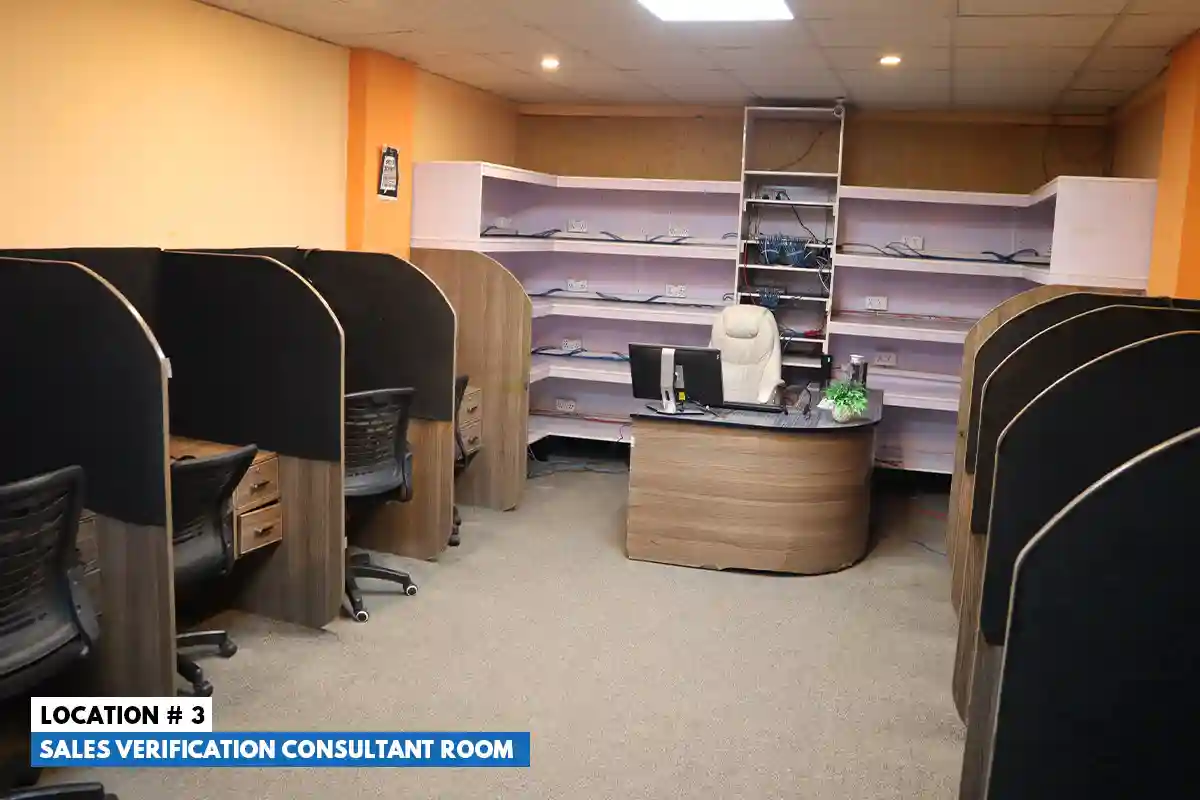
Prime BPO runs sales and customer contact campaigns for US clients from six offices in Rawalpindi, Pakistan, and is certified to ISO 18295-1:2017 for customer contact centers. Its jobs page currently lists sales roles at its Satellite Town and Saddar offices, including Sales Executive, Business Development Specialist, Junior Closer, Senior Sales Closer, and Sales Verification Consultant positions on final expense and medical alert campaigns. It doesn't currently list B2B account executive roles.
These closing roles build many of the same skills as an AE: running sales conversations, handling objections, and closing on the phone with US customers. For more on them, see Prime BPO's guides to closer jobs, the business development executive role, and call center interview questions.
Steps to apply
- Review current openings on the Prime BPO jobs page.
- Prepare a short resume that highlights sales results, targets met, and spoken English.
- Practice a short sales pitch and objection responses for the interview.
- Apply through the listing or contact the Prime BPO team.
Conclusion
An account executive is the person who turns qualified interest into revenue. The job combines discovery, presentation, negotiation, and disciplined pipeline management, and it's paid largely on results. Pay rises sharply from SMB to enterprise roles, and the skills transfer well into senior sales and leadership.
|
Your situation |
Where to start |
|
New to sales |
An SDR, BDR, or phone sales role to learn prospecting and objection handling |
|
SDR or BDR with a strong record |
Associate or SMB account executive |
|
SMB AE consistently over quota |
Mid-market AE |
|
Experienced mid-market AE |
Enterprise or senior AE |
|
Prefer relationships over new business |
Account manager or customer success |
|
Want remote work |
Remote AE roles in software and B2B services |
|
In Pakistan, want US sales experience |
Phone sales and closing roles at a certified BPO |
Start Your Sales Career With Prime BPO
If you want hands-on experience closing sales with US customers, explore sales careers at Prime BPO. You'll find current openings and how to apply on each listing, or you can contact the Prime BPO team at +92-51-8733177.
Frequently Asked Questions
What does an account executive do?
An account executive manages sales deals from qualified lead to signed contract. They run discovery calls, present or demo the product, prepare proposals, handle objections, negotiate pricing and terms, and close the deal, then hand the customer to account management or customer success. They also keep their pipeline updated in a CRM, forecast revenue, and in many companies prospect for some of their own leads.
Is an account executive a high position?
It's a mid-level sales role. Account executives sit above SDRs and BDRs and below sales managers and directors, and they're usually individual contributors rather than managers. Senior and enterprise AEs can earn a lot, with RepVue reporting a median enterprise AE OTE of $260,000 in tech sales, and the role is a common route into sales leadership.
Is being an account executive a hard job?
It can be demanding. AEs are measured against a revenue quota, face frequent rejection, and have income that depends partly on results. Long sales cycles and lost deals can be stressful. People who enjoy competition, stay organized, and learn from losses tend to do well, and the earning potential is a big part of the appeal.
What are the responsibilities of an account executive?
The main responsibilities are qualifying opportunities, running discovery calls, delivering presentations and demos, writing proposals, negotiating contracts, and closing deals. AEs also manage their sales pipeline and forecast in a CRM, work with sales engineers, legal, and finance on larger deals, and hand new customers over smoothly. Some roles include prospecting and account management too.
What's the difference between an account executive and an account manager?
An account executive focuses on winning new customers, while an account manager focuses on keeping and growing existing ones through renewals, upsells, and support. AEs usually earn a larger share of their pay through commission. PayScale's 2026 data puts average base pay at about $70,900 for AEs and $67,200 for account managers.
Sources and 2026 Verification
- PayScale: Account executive salary, October 2026
- PayScale: Senior account executive salary, October 2026
- PayScale: Account manager salary, October 2026
- RepVue: SMB account executive salaries, December 2025
- RepVue: Mid-market account executive salaries, December 2025
- RepVue: Enterprise account executive salaries, February 2025
- BLS: Wholesale and manufacturing sales representatives, May 2025
- Prime BPO: Jobs
Disclaimer: Salary figures are averages and medians from self-reported and government data and vary by industry, location, company, and experience. RepVue data reflects mostly technology sales. The OTE and resume examples are hypothetical illustrations. Job listings change; check the Prime BPO jobs page for current openings.