



Cold lists, tired scripts, and agents dialing numbers all day with no qualification process. That is the version of outbound call center lead generation that burns budget and produces leads sales will not touch. It is also the version most companies are still running, which is why the channel gets blamed for low ROI when the real problem is execution.
Outbound call center lead generation is not obsolete. It is one of the only channels where you choose exactly which company gets contacted, instead of waiting for the right prospect to find you. The businesses getting a real pipeline from it in 2026 treat it as a data driven, compliance aware process, not a numbers game.
A Short Answer
Outbound lead generation is a proactive sales process. The trained agents will contact the prospects who have not yet engaged with your business, qualify their interest, their budget against your customer profile, then pass the sales lead to your team or book the appointment directly. This will work best for B2B companies with defined ICP and validated offer and then generally it will cost more partly than inbound but it produces higher intent, higher opportunities when the list, script and qualification criteria will build correctly.
Key Takeaways
- According to data compiled by G2, outbound leads close at roughly 1.7% on average as compared to 14.6% for SEO driven inbound leads. Lower close rate does not mean lower value, it means outbound needs volume and precision, not both at once.
- Cold calling connects at roughly 16.6% when lists are small and targeted, according to brandID's 2026 outbound benchmarks.
- The global call and contact center outsourcing market is projected to reach $110.0 billion in 2026, with the outbound services segment identified as the fastest growing segment, according to Grand View Research.
- Outbound calling remains a core revenue channel; 61% of business leaders report call volumes have increased since 2020 to 2021, per Readymode's 2026 outbound calling data.
- Compliance is not optional. The FTC's Telemarketing Sales Rule requires telemarketers to scrub calling lists against the National Do Not Call Registry using a version no older than 31 days, per the FTC's official Q&A on DNC provisions.
What Is Outbound Call Center Lead Generation?
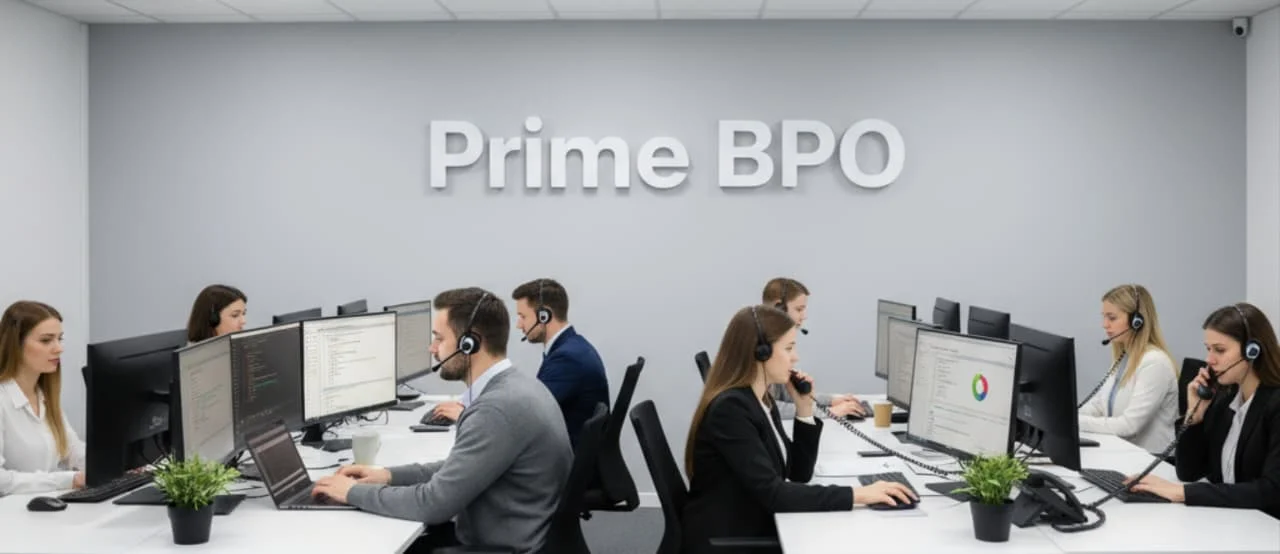
Outbound call center lead generation is the process of using trained agents, usually working from a dedicated call center or BPO partner, to initiate contact with prospects and move them toward a sales conversation. It covers outbound telemarketing lead generation, cold calling, outbound appointment setting services, and lead qualification, all run against a defined list rather than waiting for prospects to opt in.
This is the direct opposite of inbound, where the prospect finds you through search, content, or referral. In outbound, your team or your outsourced call center decides who gets called, when, and with what message. That control is the entire value proposition of the channel.
Get Free Quotes
Customized Options Await
Outbound vs Inbound Lead Generation: The Real Difference
The comparison usually gets reduced to close rate, and outbound loses that comparison every time. SEO driven inbound leads close at about 14.6%, while outbound leads close at about 1.7%, per data cited by G2. But close rate alone does not tell you whether a channel is worth running.
|
Factor |
Outbound Lead Generation |
Inbound Lead Generation |
|
Who initiates contact |
Your team or call center partner |
The prospect |
|
Average close rate |
About 1.7% (G2) |
About 14.6% (G2) |
|
Time to first result |
Fast, can start dialing within days |
Slower, depends on content and SEO ramp |
|
Account selection |
You choose the exact target companies |
You reach whoever searches or converts |
|
Best suited for |
Defined ICP, enterprise or B2B sales cycles |
High search volume products, self-serve products |
|
Typical cost pattern |
Higher cost per lead, often higher contract value |
Lower cost per lead, longer ramp time |
Neither channel replaces the other. Cience reports that a McKinsey study found 40% of respondents expect inbound call volume to decline significantly over the next decade, which is part of why B2B teams that specialize in outbound calling are seeing renewed demand, according to Cience's 2026 outbound metrics report.

How Outbound Lead Generation Works, Step by Step
A properly run outbound program follows a repeatable sequence, not a script read to every number on a list.
- Build the Ideal Customer Profile. Agents target companies that match firmographic and behavioral criteria, not a generic industry list. This is what separates modern outbound from old style spray and pray telemarketing.
- Source and verify the contact list. Numbers are checked against the National Do Not Call Registry and any internal suppression lists before a single call is dialed, which is a legal requirement under the FTC's Telemarketing Sales Rule, not a best practice suggestion, per the FTC.
- Open with a reason to talk, not a pitch. The first ten seconds determine whether the call continues. Agents lead with a relevant trigger, a shared pain point, or a specific reason the call is happening now.
- Qualify against BANT or a similar framework. Budget, authority, need, and timeline get confirmed before a lead is marked sales ready. This step is what turns outbound lead qualification into a discipline instead of guesswork.
- Book the appointment or route the lead. Sales ready contacts get an appointment on a calendar or get routed directly into the CRM with full call notes attached.
- Follow up on a defined cadence. Most prospects do not convert on the first call. Structured follow up across multiple touches is what separates high performing outbound programs from one and done dialing.

Get Free Quotes
Customized Options Await
Core Outbound Lead Generation Strategies That Still Work in 2026
Outbound telemarketing lead generation. Still the foundation of B2B outbound, but the difference in 2026 is personalization. 71% of consumers expect personalized interactions, and 76% report frustration when they do not get them, according to Readymode.
Outbound appointment setting services. Instead of asking a rep to close on the first call, agents are trained solely to qualify and book time on a sales calendar. This shortens the sales cycle for complex B2B products where a single call rarely closes a deal.
Account based outbound. Agents work a short, high value list of named accounts instead of a broad list, calling multiple stakeholders inside the same company. Smaller, more targeted campaigns outperform large ones; campaigns to fewer than 50 recipients average higher reply rates than campaigns sent to over 1,000, according to brandID's 2026 data.
Multi-channel outbound sequencing. Calls paired with email and LinkedIn outreach outperform any single channel used alone, since prospects respond to different formats depending on where they are in their buying journey.
Benefits of Outbound Lead Generation for B2B Companies
Outbound lead generation earns its place in the funnel for reasons that go beyond close rate.
- You choose the target account. Inbound can only capture whoever happens to search; outbound reaches the specific companies you have decided to win this year.
- Faster pipeline for new products. You do not need to wait for organic search rankings or content to build authority before generating conversations.
- Higher average contract value. Outbound leads often carry a higher lifetime value that offsets the higher cost per lead, particularly for enterprise accounts.
- Direct market feedback. Every call gives your team real time insight into objections, pricing sensitivity, and messaging that resonates, which is difficult to get from a web form.
Outsourced Outbound Call Center vs In-House Team: Cost and Scale
Building an in house outbound team means that you need to hire and train employees, buy calling software, manage the compliance, and also check call quality. Outsourcing to a specialized call center partner will take care of all these tasks for you and gives you a more predictable cost.
|
Factor |
In-House Outbound Team |
Outsourced Call Center Partner |
|
Cost per agent hour |
Varies by market and full-time salary and benefits load |
Nearshore rates run about $12 to $18 per hour versus $25 to $45 for US onshore agents, per Call Force Global's 2026 rate data |
|
Time to launch |
Weeks to months for hiring and training |
Days to a few weeks with an established BPO |
|
Scalability |
Slow, tied to hiring cycles |
Fast, agents can be added or reduced with demand |
|
Compliance management |
Falls entirely on your internal team |
Typically built into the provider's process and training |
|
Annual agent turnover |
30% to 45% industry wide, per Insignia Resources data cited by VoxBooster |
Absorbed by the provider, not your internal headcount |




































Outbound Call Center Best Practices and Compliance
Respect the National Do Not Call Registry. Telemarketers are required to scrub calling lists against the registry using a version no more than 31 days old, and civil penalties for violations can reach into the tens of thousands of dollars per call under the FTC's Telemarketing Sales Rule, per FTC guidance on TSR compliance.
Call within permitted hours. The TSR treats calls placed before 8 a.m. or after 9 p.m. in the recipient's local time as an abusive practice, according to the same FTC compliance guide.
Train agents on qualification, not just scripts. A script tells an agent what to say. Qualification criteria tell an agent when a lead is actually worth passing to sales.
Respond fast once a lead is qualified. 90% of customers say a quick response is critical, and 60% consider a response within 10 minutes to be immediate, according to Readymode's 2026 benchmarks.
Review call recordings for quality, not just compliance. Consistent coaching based on real calls is what improves connect and qualification rates over time, rather than relying on script changes alone.

Choosing an Outbound Call Center Partner
If you are evaluating outbound call center outsourcing options for your business, the decision usually comes down to three things: whether the provider has experience in your industry, how they handle compliance and list scrubbing, and whether they report qualification data you can actually use to coach your own sales team.
At Prime BPO, outbound programs are built around a defined ICP, documented qualification criteria, and full compliance with FTC telemarketing rules from the first call. If you are weighing whether to build an in-house outbound team or bring in a partner, we are happy to walk through what a program built around your specific sales process would look like, no pressure, just a straight answer on what would actually move your pipeline.
Get Free Quotes
Customized Options Await
FAQS
What is outbound lead generation?
Outbound lead generation means that you have to actively protect the potential customers through emails, calls, messages and other methods to find the people who will be possibly interested in your products or services.
What is lead generation in a call center?
Lead generation in a call center means that the agents contact the potential customer, then learn about their needs and identify the people who can be interested in the company's product or their services.
What are some examples of outbound lead generation?
The most common examples of outbound lead generated include old calling, email outreach , LinkedIn messages, direct mail and contacting the leads from a targeted customer list.
How many outbound calls per hour?
The Number can be different by industry, call length and dialing system. With the manual dialer, the agents can make around 10 to 20 calls per hour while the automated system can support more calls.