





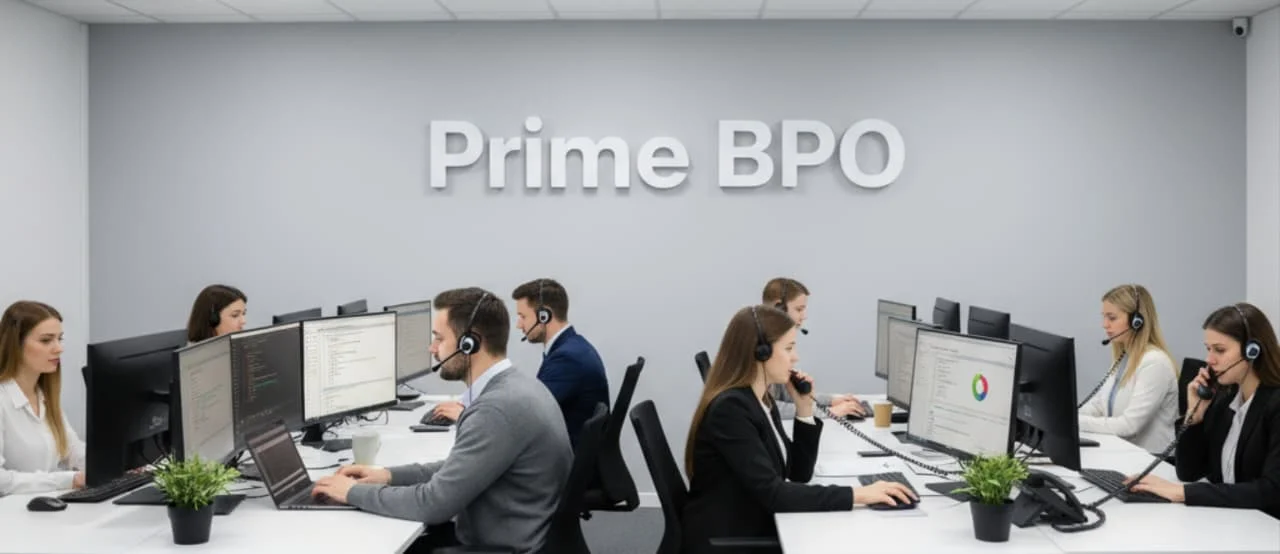





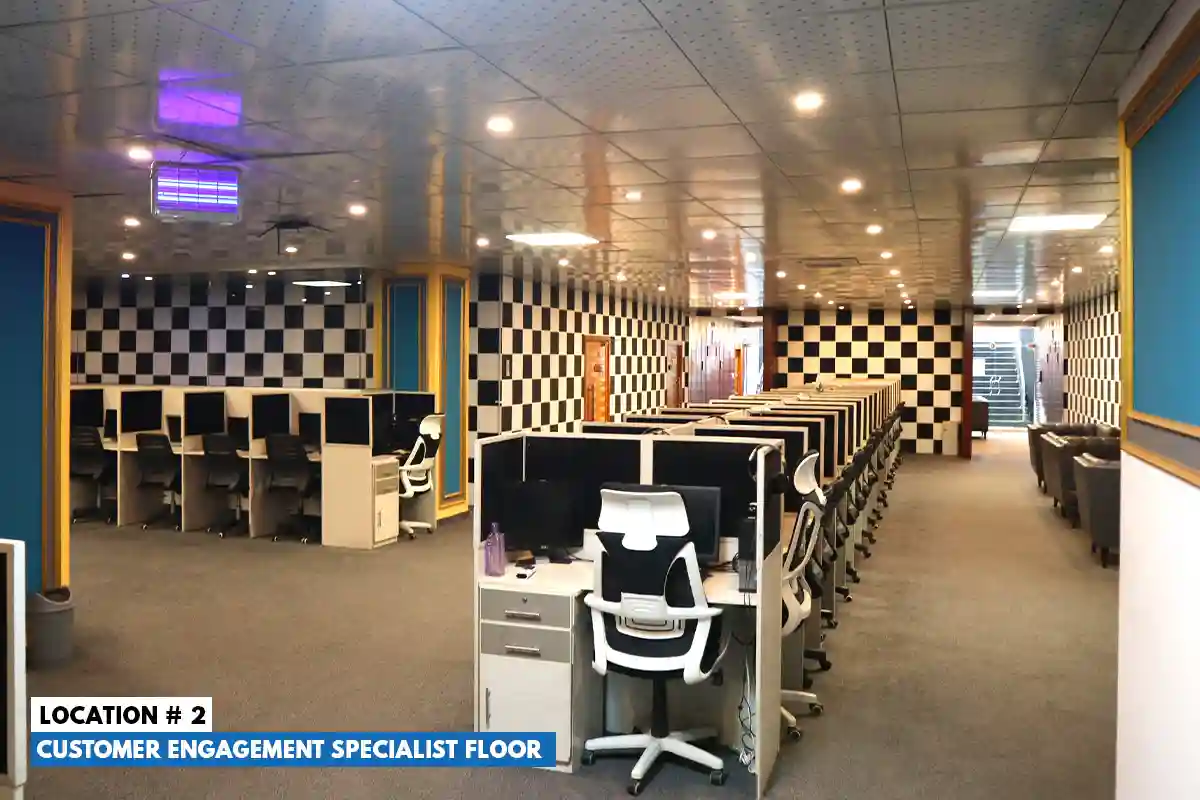




















Choosing between offshore and nearshore outsourcing is rarely about one hourly rate. The hourly rate a vendor quotes is only the start. Time zone gaps, supervision, rework, and agent turnover decide what a support program really costs, and how customers feel after every call. This guide compares onshore, nearshore, and offshore BPO side by side. It covers 2026 rate benchmarks, a total cost of ownership (TCO) formula, use cases for each model, and a hybrid structure that many contact centers use to get both savings and speed.
Quick answer: Offshore BPO (for U.S. companies: the Philippines, India, Pakistan) typically costs about 8–16 per agent hour with a 9–13 hour time gap. Nearshore BPO (Mexico, Colombia, Central America) typically costs about 13–24 per hour with a 0–3 hour gap. Offshore wins on cost and scale; nearshore wins on real-time collaboration. Most large programs combine the two.
What is the difference between offshore and nearshore BPO?
Offshore BPO moves work to a distant country, usually on another continent, with a large time difference and the lowest labor costs. Nearshore BPO moves work to a neighboring or nearby country in a similar time zone, so teams can work together in real time at a moderate cost. The core trade-off is cost versus closeness.
Both are forms of business process outsourcing (BPO): handing a function such as customer support, technical support, sales, or back-office processing to a specialized provider. What separates them is geography, and geography drives almost everything else: time zone overlap, language and cultural fit, travel time for managers, and cost.
The geographic spectrum: onshore, nearshore, and offshore
For a company based in the United States, the three geographic outsourcing models look like this:
|
Model |
Where the team sits (for U.S. buyers) |
Typical time difference vs. U.S. Eastern |
Typical flight from the U.S. |
|
Onshore |
Within the U.S. |
0–3 hours |
Domestic flight |
|
Nearshore |
Mexico, Colombia, Costa Rica, Dominican Republic, other Latin American countries |
0–3 hours |
About 2–6 hours |
|
Offshore |
Philippines, India, Pakistan, other Asian countries |
About 9–13 hours |
About 15–24 hours, often with a connection |
Note: "Nearshore" and "offshore" are relative to the buyer. For a U.S. company, Pakistan is offshore; for a company in the Gulf, it could be close to nearshore. This guide uses the U.S. buyer's point of view.
Time differences shift by an hour when U.S. daylight saving time starts or ends, because most offshore and many nearshore countries don't change their clocks. For a closer look at all the delivery models, see Prime BPO's guide to types of outsourcing.

Core differences: offshore BPO vs. nearshore BPO
The biggest differences between offshore and nearshore BPO are time zone overlap, cultural and language fit, and how easily your managers can oversee the team. Cost matters too, but these three factors decide how much of the savings you actually keep.
Time zone alignment: synchronous vs. asynchronous work
Nearshore teams work during your business day, so a product manager can message an agent at 2 p.m. and get an answer at 2:05. Offshore teams supporting U.S. customers during U.S. hours work night shifts in their own country; teams working their local day hours cover your night.
That creates two working styles:
- Synchronous (nearshore): Live meetings, instant escalations, same-day fixes. Best when processes change often.
- Asynchronous (offshore): Work is handed off with clear documentation and picked up overnight. Best when processes are stable and well written down.
Offshore centers that staff U.S. hours through night shifts close much of this gap for customer-facing work. The remaining friction is mostly between your internal teams (engineering, product, billing) and the outsourced agents.

Cultural affinity, accents, and customer effort
Customer effort score (CES) measures how hard a customer had to work to get an issue solved. Anything that adds friction, such as repeated explanations, misunderstood idioms, or an unfamiliar accent, pushes effort up.
Nearshore agents in Latin America often share U.S. pop culture, sports, and shopping habits, and many grow up with U.S. media. Offshore hubs like the Philippines, India, and Pakistan have large English-speaking talent pools as well. Prime BPO's Pakistan outsourcing guide covers that market. In practice, agent selection, accent training, and well-written scripts matter more than the country. A well-trained offshore team beats a poorly run nearshore team on every customer experience (CX) metric.
Executive oversight, travel, and SLA compliance
A manager in Dallas can fly to Mexico City and back the same day; a visit to Manila or Lahore takes most of a week once travel time is included. That affects how often leaders visit, how quickly a struggling program gets hands-on help, and how easily you run onsite training for new launches.
Whatever the location, quality depends on a tight service-level agreement (SLA) with measurable targets: answer speed, abandonment rate, first-contact resolution, and quality assurance (QA) scores. Remote monitoring, live dashboards, and recorded calls now make it possible to manage an offshore team almost as closely as one down the road.
Nearshore BPO vs. offshore BPO: master comparison
|
Factor |
Nearshore BPO |
Offshore BPO |
|
Geographic distance (from the U.S.) |
Neighboring region, 2–6 hour flight |
Other continent, 15–24 hour trip |
|
Typical hourly rate (2026) |
About 13–24 |
About 8–16 |
|
Time overlap with U.S. business hours |
Full or nearly full |
Requires night shifts for live U.S. coverage |
|
Communication style |
Mostly synchronous |
Mix of synchronous (night shift) and asynchronous handoffs |
|
Turnover |
Varies by provider and city |
Varies by provider and city; large talent pools make backfilling faster |
|
Scalability |
Moderate; smaller talent pools per city |
High; very large English-speaking workforces |
|
Ideal use cases |
Complex tech support, high-value sales, fast-changing processes |
High-volume customer service, L1 helpdesk, back office, 24/7 coverage |
Note: Turnover depends far more on the individual provider (pay, management, career paths) than on the country. Ask every shortlisted vendor for its actual monthly attrition and how it is measured.
Get Free Quotes
Customized Options Await
Hourly rate cards vs. total cost of ownership (TCO)
The hourly rate card is only the visible part of outsourcing costs. Total cost of ownership adds the supervision, quality checks, turnover, and rework a program needs. Those hidden costs are usually higher for offshore programs, so the real gap between offshore and nearshore is smaller than the rate cards suggest. Offshore usually still costs less.
2026 rate cards: offshore vs. nearshore outsourcing costs
Published 2026 benchmarks put fully loaded, per-agent-hour rates for contact center outsourcing in these ranges:
|
Model |
Typical 2026 rate per agent hour |
Examples of large-provider ranges |
|
Onshore (U.S.) |
About 25–50+ |
28–45 |
|
Nearshore (Latin America) |
About 13–24 |
13–24 |
|
Offshore (Philippines, India, Pakistan) |
About 8–16 |
8–16 |
Rates rise with complexity. Bilingual agents, licensed or regulated work, and technical support outsourcing sit at the top of each range; basic data entry and simple inbound queues sit at the bottom.

The TCO iceberg: why $12 vs. $20 is misleading
Comparing a $12 offshore rate with a $20 nearshore rate suggests offshore saves 40%. That's true for labor, but not for the whole program. Use this formula instead:
Real TCO per hour = Direct labor rate
+ Management and QA overhead
+ Turnover and retraining costs
+ Communication friction losses
Deconstructing hidden outsourcing costs
- Management and QA overhead: Your own staff time for calibration sessions, call reviews, reporting, and vendor meetings. It grows with time zone distance and process complexity.
- Turnover and retraining: Every agent who leaves takes product knowledge with them. Replacing them means recruiting, training, and a ramp-up period with weaker metrics.
- Rework cycles: Tickets reopened, callbacks, and escalations that bounce back to your in-house team.
- Communication friction losses: Delays waiting for answers across time zones, slower process changes, and errors from unclear handoffs.
Illustrative TCO breakdown
|
Cost component (per agent hour) |
Onshore |
Nearshore |
Offshore |
|
Direct labor rate |
$35.00 |
$18.00 |
$12.00 |
|
Management and QA overhead |
$0.75 |
$1.00 |
$1.50 |
|
Turnover and retraining |
$1.50 |
$0.75 |
$1.00 |
|
Communication friction |
$0.25 |
$0.50 |
$1.50 |
|
Real TCO per hour |
$37.50 |
$20.25 |
$16.00 |
For a 50-agent program working 2,080 hours per agent per year (104,000 hours), the rate cards show a gap of about 624,000ayearbetweennearshore(18) and offshore ($12). After hidden costs, the gap is about $442,000. That is smaller, but still a large saving for offshore.
Note: The overhead, turnover, and friction figures above are illustrative assumptions, not industry averages. Plug in your own numbers. For a complex technical support line, friction can erase most of the offshore saving; for a stable, high-volume queue, it may be close to zero.

Onshore vs. nearshore vs. offshore: cost and capability matrix
|
Factor |
Onshore |
Nearshore |
Offshore |
|
Hourly cost |
Highest (25–50+) |
Moderate (13–24) |
Lowest (8–16) |
|
Time zone overlap |
Full |
Full or nearly full |
Night shifts needed for live U.S. hours |
|
Language fluency |
Native |
Strong English; native Spanish |
Strong English in major hubs |
|
Travel time |
Hours |
2–6 hours |
15–24 hours |
|
Operational agility |
Highest |
High |
Moderate; best with documented processes |
|
Scalability |
Limited by U.S. labor costs |
Moderate |
Highest |
|
24/7 coverage |
Expensive |
Possible, often with night shifts |
Natural fit |
Prime BPO's guide to call center cost reduction covers more ways to lower TCO after you choose a model.
Key benefits and use cases for nearshore BPO
Nearshore outsourcing is the stronger choice when work changes often, needs close collaboration with your in-house teams, or involves complex, high-value conversations. You pay more per hour than offshore, in exchange for speed and closeness.
Real-time collaboration for agile product and tech teams
Software and SaaS companies that ship updates every week need support agents who learn changes the same day. With a nearshore team, agents can join product standups, escalate bugs to engineers in real time, and test fixes with customers on the same call. That makes nearshore a common choice for Tier 2 and Tier 3 technical support outsourcing.
High-touch customer service and complex sales
Conversations that involve large purchases, retention offers, or complicated account problems benefit from agents who share cultural context with customers and can coordinate live with your managers. Bilingual English–Spanish support for U.S. Hispanic customers is another major nearshore strength.
Simpler oversight and geographic risk distribution
Short flights make audits, onsite training, and executive visits easy. Adding a nearshore site also spreads risk: if weather, power, or political events disrupt one location, another can absorb volume.
On data security and compliance, U.S. rules such as HIPAA, PCI DSS, and state privacy laws apply to your customer data wherever the work is done. Nearshore doesn't remove those obligations, but closer proximity can make on-site audits and incident response easier.
Note: Nearshore talent pools are smaller than the largest offshore hubs, so very large or fast-growing programs may run into hiring limits in a single city.
|
Nearshore BPO is a strong fit when… |
Why |
|
Processes change weekly |
Same-day training and updates |
|
Tier 2/3 tech support |
Live escalation to your engineers |
|
High-value sales or retention |
Cultural fit and live coaching |
|
English–Spanish bilingual queues |
Native Spanish talent |
|
Leaders want frequent site visits |
Short flights |
Key benefits and use cases for offshore BPO
Offshore outsourcing is the stronger choice when you need the lowest cost per hour, large teams, or round-the-clock coverage for stable, well-documented processes. The main benefits of offshore outsourcing are cost savings, scale, and 24/7 operations.
Maximum cost savings at enterprise scale
At about 8–16 per agent hour, offshore rates are often half of nearshore and a third or less of onshore. For a large program, that difference funds better tools, more QA, or a bigger team for the same budget.
24/7/365 "follow-the-sun" coverage
When it's night in the U.S., it's daytime in South and Southeast Asia. Offshore teams can cover overnight phone and chat queues without the premium shift pay onshore centers need, and back-office work submitted in the evening can be finished by the next morning.
Large talent pools for high-volume work
The Philippines, India, and Pakistan have large, English-speaking, university-educated workforces, which makes it easier to hire 50 or 500 agents quickly and backfill attrition. Offshore is a natural fit for:
- Inbound customer service outsourcing and inbound call center queues
- L1 helpdesk and password resets
- Data entry, claims processing, and document handling
- Back-office operations such as order processing and billing support
- Outbound telesales and lead generation
Note: Offshore works best with clear documentation: written procedures, knowledge bases, and defined escalation paths. Programs with constantly changing rules need extra investment in training and QA to keep quality high.
Prime BPO's article on the benefits and risks of offshoring covers the risks and how to manage them.
The 80/20 hybrid BPO strategy: combining nearshore and offshore
A hybrid model sends most volume, often around 80%, to an offshore team for cost and scale, and keeps the roughly 20% of complex or high-value interactions with a nearshore or onshore team. The split is a starting point; the right ratio depends on your contact mix.
How tiered support architecture works
|
Tier |
What it handles |
Best location |
|
Tier 0 |
Self-service, knowledge base, chatbots |
Automated |
|
Tier 1 |
Routine questions, order status, password resets, billing basics |
Offshore |
|
Tier 2 |
Technical troubleshooting, complaints, retention offers |
Offshore or nearshore, depending on complexity |
|
Tier 3 |
Escalations needing engineers, VIP accounts, high-value sales |
Nearshore or onshore |
|
Back office |
Data entry, claims, document processing |
Offshore |
See Prime BPO's guide to customer self-service for building out Tier 0.

Routing high-touch work nearshore and high-volume work offshore
Skills-based routing in your contact center platform sends each interaction to the right tier based on IVR choices, customer value, or topic. A simple decision flow:
- Is the issue routine and documented? → Offshore Tier 1.
- Does it need a live handoff to your engineers or managers during U.S. business hours? → Nearshore or onshore.
- Is the customer high-value or about to cancel? → Senior agents, wherever your best retention team sits.
- Is it after U.S. business hours? → Offshore team, with written escalation notes for the morning.
Using the illustrative TCO figures above, an 80/20 split of offshore (16.00)andnearshore(20.25) gives a blended cost of about $16.85 per hour. That is close to offshore pricing, with real-time support for the interactions that need it most.
Note: Hybrid models add vendor management work: two sites, two sets of QA calibrations, and consistent knowledge bases. Use one shared QA scorecard and knowledge base across all locations.
Conclusion:
Offshore vs nearshore BPO isn't a contest with one winner. Offshore delivers the lowest cost and the largest scale; nearshore delivers real-time collaboration and closeness. The right choice depends on how complex your interactions are, how often your processes change, and what your real TCO looks like, not only the rate card.
|
Your situation |
Best model |
|
High-volume, stable customer service |
Offshore |
|
24/7 phone, chat, or email coverage |
Offshore |
|
Data entry, claims, and back-office work |
Offshore |
|
Fast-changing tech support needing live engineer access |
Nearshore |
|
High-value sales or English–Spanish bilingual queues |
Nearshore |
|
Mixed contact types at scale |
Hybrid: offshore for volume, nearshore or onshore for complex work |
Optimize global operations with Prime BPO
Prime BPO runs offshore contact center and back-office operations from multiple sites in Pakistan for U.S. and international clients, with teams staffed to cover U.S. business hours and overnight queues. Its customer contact operations are certified to ISO 18295-1:2017. Prime BPO outsourcing solutions include call center services, customer service, technical support, call quality assurance, and back-office processing. That makes Prime BPO a strong fit for the high-volume offshore tier of a hybrid model.
To review your outsourcing mix and build a dedicated offshore team, schedule a sourcing consultation at Prime BPO.
Get Free Quotes
Customized Options Await
Frequently asked questions
What is the main difference between offshore vs. nearshore outsourcing?
The main difference is distance and time zone. Offshore outsourcing sends work to a distant country, such as the Philippines, India, or Pakistan for U.S. companies, with a 9–13 hour time gap and the lowest rates. Nearshore outsourcing uses nearby countries, such as Mexico or Colombia, with a 0–3 hour gap and moderate rates.
Is nearshore BPO more expensive than offshore BPO?
Yes, usually. In 2026, nearshore rates typically run about 13–24 per agent hour, versus about 8–16 offshore. Hidden costs such as supervision, rework, and communication delays narrow the gap, but offshore generally remains cheaper in total cost of ownership for stable, high-volume work.
Which outsourcing model is best for customer service?
For high-volume, routine customer service and 24/7 coverage, offshore usually gives the best value. For complex, high-value, or fast-changing support, nearshore can deliver better results. Many companies use a hybrid: offshore for Tier 1 volume and nearshore or onshore for escalations.
How do I decide between nearshore and offshore BPO for my business?
Map your contact types by complexity and volume, calculate the real TCO for each option, and decide how much real-time collaboration your teams need. If most work is routine and documented, start offshore. If most of it needs live coordination with your engineers or managers, start nearshore. If you have both, build a hybrid model.
What are the top outsourcing destinations for U.S. companies?
Common offshore destinations are the Philippines, India, and Pakistan. Common nearshore destinations are Mexico, Colombia, Costa Rica, and the Dominican Republic.
How do onshore vs. nearshore vs. offshore outsourcing compare?
Onshore is the most expensive (25–50+ per hour) with full cultural and time zone alignment. Nearshore is moderate (13–24) with close time zones. Offshore is the lowest cost (8–16) with the largest scale and natural 24/7 coverage.
Sources And 2026 Verification
Note: All sources opened October 20, 2026. Hourly rates are published industry ranges and vary by provider, country, language, and complexity. The TCO breakdown and hybrid blended cost are illustrative estimates; time differences and flight times are approximate and change with daylight saving time and routing.