





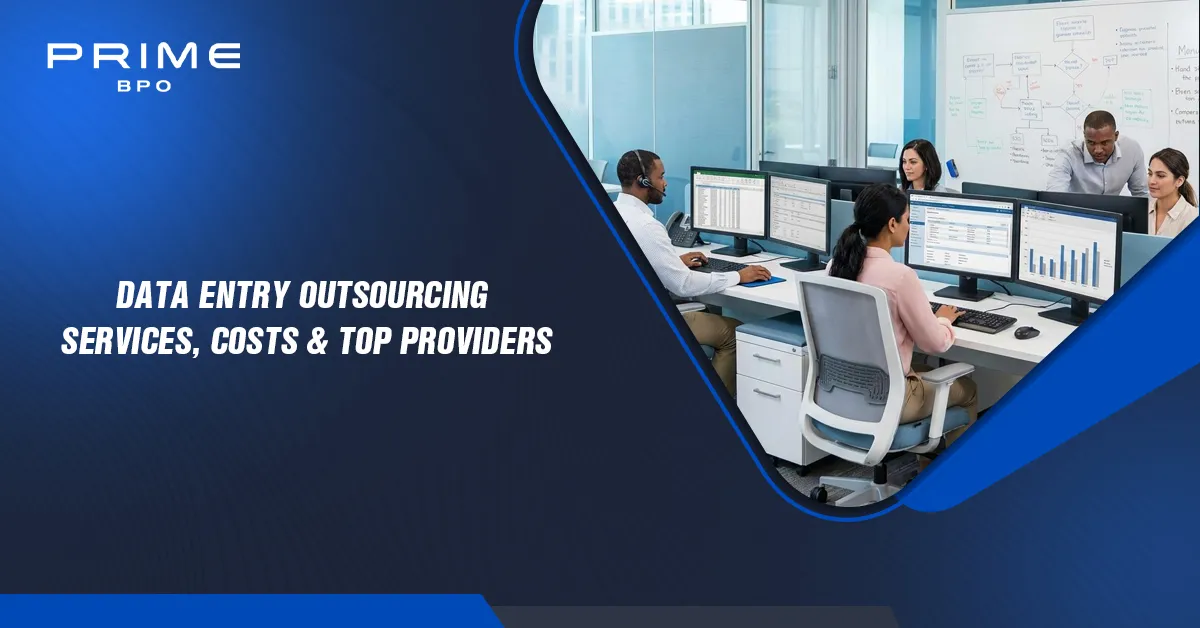



































Data entry outsourcing means paying a specialist team to handle the typing, checking, and updating of business data that would otherwise tie up your own staff. For many US companies, it's one of the simplest back-office tasks to hand off: the work is rules-based, easy to measure, and often far cheaper offshore than in-house.
Quick answer: Data entry outsourcing is contracting an outside provider to enter, verify, clean, and maintain your business data, such as invoices, product listings, forms, and CRM records. Industry benchmarks for 2026 put offshore rates at roughly $4 to $9 an hour, compared with $15 to $20 for US agencies and $18 to $25 for US in-house operators.
What Is Data Entry Outsourcing?
Data entry outsourcing is the practice of delegating data entry and related tasks, such as extraction, conversion, verification, cleansing, and database updates, to an external business process outsourcing (BPO) provider. The provider's team works in your systems or theirs, following your rules, and delivers data back to you at an agreed accuracy and turnaround time.
It covers a wide range of work:
- Manual and bulk data entry: typing information from paper, PDFs, images, or forms into a system.
- Data extraction: pulling specific fields from documents, websites, or emails.
- Data conversion and digitization: turning paper records or scanned files into searchable digital data.
- Data cleansing and validation: finding and fixing duplicates, errors, and missing fields.
- Database and CRM management: keeping customer, product, or vendor records current.
- Data migration: moving records from one system to another, such as a new ERP or CRM.
Why businesses outsource data entry
The main reasons are cost, capacity, and focus. Data entry is repetitive, time-consuming work that rarely needs your most experienced staff, so moving it to a dedicated team frees employees for work that needs their judgment.
- Lower cost: offshore rates are often a fraction of US in-house costs.
- Scalability: add capacity for seasonal spikes, backlogs, or one-time migrations without hiring.
- Faster turnaround: dedicated teams can work across time zones, so work submitted at the end of a US day can be ready the next morning.
- Consistent quality: established providers use checklists, double entry, and audits that are hard to maintain in a small in-house team.
- Focus: finance, operations, and sales staff spend less time typing and more time on decisions.
See our guides to back-office outsourcing and outsourcing back-office work effectively.
How to choose a data entry outsourcing company
The best data entry outsourcing company for you is the one that can prove accuracy, protect your data, and work in your systems at a price that fits. Rather than relying on "best company" lists, compare providers on:
- Accuracy and quality control: how they measure accuracy, and whether they'll commit to it in writing.
- Security and compliance: controls for your data and, where relevant, willingness to sign a HIPAA business associate agreement.
- Industry experience: familiarity with your document types and systems.
- Pricing clarity: hourly, per-record, or dedicated team pricing, with no surprise fees.
- A paid or free trial: a small test batch before you commit.
- Communication: a named point of contact, reporting, and overlap with your working hours.

Data Entry Outsourcing Services by Industry
Most data entry outsourcing falls into a few industry patterns. The work looks different in each, but the goal is the same: accurate data in the right system, on time.
E-commerce product listing and SKU management
Online retailers outsource product data entry to keep catalogs accurate across their store and marketplaces. Typical tasks include creating and updating product listings, entering titles, descriptions, attributes, and prices, enriching SKUs with specifications and images, updating inventory counts, and keeping listings consistent across channels. Outsource Accelerator's 2026 benchmark cites an example of a 4,000-SKU Shopify catalog priced at about $0.35 per SKU. See our guide to e-commerce call center outsourcing for related support work.
Healthcare and medical data entry
Healthcare data entry includes patient intake forms, demographic and insurance updates, electronic health record (EHR) data entry, and claims data entry. Because this work involves protected health information (PHI), a provider that handles it for a covered entity is a business associate under HIPAA and must sign a business associate agreement (BAA). According to HHS, a BAA must limit how PHI is used, require appropriate safeguards (including the HIPAA Security Rule for electronic PHI), require reporting of breaches and security incidents, and pass the same obligations down to any subcontractors.
Financial and invoice data entry
Finance teams outsource accounts payable data entry, invoice and receipt processing, expense reports, purchase orders, and ERP data entry. Accuracy matters most here, because a single wrong digit can mean an incorrect payment. Most providers combine OCR extraction with human review and validation rules, such as matching invoice totals to purchase orders. Read about finance and accounting outsourcing and accounts receivable management.
Logistics and bill of lading digitization
Logistics companies outsource shipment and freight data: bills of lading (BOL), proof-of-delivery documents, carrier invoices, customs paperwork, and tracking updates. Digitizing these documents makes shipment data searchable and speeds up billing and dispute resolution.
Insurance and legal document processing
Insurance and legal teams outsource claim forms, policy data, applications, and large document backlogs. Common projects include migrating policy data to a new system and bulk digitization of archived files. These documents often contain sensitive personal information, so access controls and confidentiality agreements matter. Read about outsourcing document management.
Data cleansing, validation, and CRM data entry
Over time, customer and vendor databases fill with duplicates, outdated contacts, and incomplete records. Data cleansing projects find and merge duplicates, standardize formats, verify contact details, and fill missing fields. CRM data entry keeps new leads, notes, and activity logs current so sales and support teams can rely on what they see.

Data entry services by industry at a glance
|
Industry |
Key data tasks |
Security and compliance needs |
Main benefit |
|
E-commerce and retail |
Product listings, SKU enrichment, inventory updates |
Account access controls |
Faster catalog updates and fewer listing errors |
|
Healthcare |
Patient intake, EHR entry, insurance and claims data |
HIPAA; business associate agreement |
Staff time back for patient care |
|
Finance and accounting |
Invoices, accounts payable, receipts, ERP entry |
Financial data controls; segregation of duties |
Faster, more accurate processing |
|
Logistics |
Bills of lading, delivery proofs, carrier invoices |
Customer and shipment data protection |
Faster billing and tracking |
|
Insurance and legal |
Claim forms, policy data, document digitization |
Confidentiality agreements; personal data protection |
Backlog reduction and searchable records |
|
All industries |
Data cleansing, CRM updates, data migration |
Access controls and audit trails |
Reliable data for decisions |
Get Free Quotes
Customized Options Await
Data Entry Outsourcing Cost in 2026: Pricing Models and Benchmarks
Data entry outsourcing is usually priced by the hour, by the record or page, or as a dedicated monthly team. Outsource Accelerator's 2026 benchmarks put outsourced rates at about $5 to $9 an hour in the Philippines and $4 to $8 in India, compared with $15 to $20 an hour for US agencies and $18 to $25 for US in-house operators.

Hourly vs. per-record vs. dedicated team pricing
- Hourly: you pay for the time spent. Best when the work varies or is hard to measure per item.
- Per record, per page, or per SKU: you pay for output. Best for high-volume, well-defined work, such as invoices, forms, or product listings. For OCR with human review, Outsource Accelerator cites about $2 to $4 per 1,000 pages.
- Dedicated team (monthly): you pay a fixed monthly fee for one or more full-time staff who work only on your account. Best for ongoing work where the team needs to learn your systems.
- Project-based: a fixed price for a defined job, such as a one-time data migration or backlog cleanup.
US onshore vs. offshore rates
Offshore providers cost less mainly because of local wage levels. Outsource Accelerator says entry-level operators in Manila or Cebu cost 60% to 75% less than onshore equivalents. Onshore providers can make sense when data must stay in the US, when the work requires US-specific knowledge, or when contracts require domestic staff.
An illustrative monthly comparison for one full-time operator (about 160 hours a month), using the midpoints of the 2026 benchmarks:
US in-house operator ($21.50/hr) ...... about $3,440 a month (before benefits and overhead)
US agency ($17.50/hr) ................. about $2,800 a month
Offshore provider ($6.50/hr) .......... about $1,040 a month
These are rough estimates for comparison; actual quotes depend on the work, accuracy targets, volume, and turnaround.
Cost factors for small businesses and enterprises
The price of a project depends on:
- Volume: larger, steady volumes usually earn lower unit rates.
- Complexity: simple typing costs less than interpreting handwritten forms or medical records.
- Document quality: poor scans and handwriting take longer.
- Accuracy target and checks: double entry and extra QA rounds add cost.
- Turnaround: same-day or overnight deadlines cost more.
- Security requirements: dedicated workstations, restricted access, or onshore-only staff raise prices.
- Systems: working directly in your ERP or CRM may require setup and training time.
Small businesses often start with hourly or per-record pricing for a specific backlog. Enterprises more often use dedicated teams with service level agreements (SLAs) for accuracy and turnaround.
Pricing models compared
|
Model |
Typical cost (2026 benchmarks) |
How accuracy is managed |
Best fit |
|
US in-house employee |
About $18 to $25 an hour, plus benefits and overhead |
Internal supervision |
Highly sensitive or specialized work |
|
US onshore agency |
About $15 to $20 an hour |
Agency QA; SLA if negotiated |
Work that must stay in the US |
|
Offshore BPO, hourly |
About $4 to $9 an hour |
Provider QA; SLA if negotiated |
Variable or mixed tasks |
|
Offshore BPO, per record |
Varies by task (for example, about $0.35 per SKU or $2 to $4 per 1,000 pages with OCR) |
Accuracy checks per batch |
High-volume, well-defined work |
|
Dedicated offshore team |
Monthly fee per full-time person |
Team lead and QA audits |
Ongoing, system-based work |
|
Freelancer |
Wide range |
Depends on the individual |
Small, short, low-risk projects |
Source for rate benchmarks: Outsource Accelerator, 2026.
Onshore vs. offshore data entry outsourcing
Offshore data entry outsourcing for US companies offers the biggest savings, while onshore providers offer closer time zones and domestic data handling. Many businesses use offshore teams for high-volume work and keep a small onshore or in-house group for the most sensitive tasks.
|
Factor |
Onshore (US) provider |
Offshore provider |
|
Hourly cost (2026 benchmarks) |
About $15 to $20 |
About $4 to $9 |
|
Time zone |
Same or close |
Often overnight turnaround for US clients |
|
Data residency |
Data and staff in the US |
Data may be accessed from abroad; review contracts and client requirements |
|
Language and context |
Native US English and familiarity with US forms |
Strong English in major outsourcing hubs; training on US formats needed |
|
Scalability |
Moderate |
High, with large labor pools |
|
Best for |
Regulated or contract-restricted work |
High-volume, rules-based processing |
Common Data Entry Outsourcing Mistakes to Avoid
Most outsourcing problems come from unclear instructions or weak oversight rather than from the provider's skill. Avoid these common mistakes:
- Skipping the trial: a sample batch on your real documents reveals accuracy and turnaround far better than a sales pitch.
- Vague accuracy terms: "high accuracy" means nothing in a contract. Define how accuracy is measured, the target, and what happens if it's missed.
- Undocumented rules: your staff may know that certain vendors' invoices go to a specific cost center. Write every rule down.
- Too much system access: give the provider only the access needed for the task, and remove it when people leave the project.
- Ignoring compliance: sharing patient data before a HIPAA business associate agreement is signed, or sending personal data without contractual protections, creates legal risk.
- No feedback loop: report errors back to the provider so it can fix root causes, not just individual records.
- Choosing on price alone: a slightly higher rate with fewer errors often costs less overall than a cheap rate that requires rework.
Note: Keep a simple log of every error you find in outsourced work, with the date, type, and record. After a few months, it shows whether quality is improving and gives you facts for SLA discussions.

Get Free Quotes
Customized Options Await
Accuracy, Security and Choosing Between In-House, Freelance, and BPO
The two things that matter most in data entry outsourcing are accuracy and data security. A cheap rate is worthless if errors have to be fixed later or sensitive data leaks, so ask every provider exactly how they handle both.
How providers ensure data accuracy
Good providers use several layers of checks:
- Double data entry (dual keying): two operators enter the same data independently, and the system flags any mismatches.
- Validation rules: automatic checks on formats, required fields, ranges, and totals (for example, invoice line items must add up to the total).
- OCR with human review: software extracts text from scans, and people verify low-confidence fields.
- Sample audits: a QA team checks a percentage of each batch and tracks error rates by operator.
- Feedback loops: errors are logged, root causes are fixed, and instructions are updated.
Accuracy targets sound similar but make a big difference at volume:
100,000 fields entered
at 99.0% accuracy -> 1,000 errors
at 99.5% accuracy -> 500 errors
at 99.9% accuracy -> 100 errors
Ask how accuracy is defined (per field, per record, or per document), how it's measured, and what happens if the provider misses the target. Put the target and the remedy in the contract.
Data security standards to ask about
Security requirements depend on your data, but common standards and controls include:
- HIPAA: required for protected health information; the provider must sign a business associate agreement.
- SOC 2: an independent audit report, developed by the AICPA, on a service provider's controls; a Type II report covers how controls worked over a period of time.
- ISO/IEC 27001: an international standard for information security management systems.
- NDAs and confidentiality clauses: binding the company and individual staff.
- Access controls: role-based access, multi-factor authentication, and no local downloads where possible.
- Secure connections: VPN or virtual desktop access to your systems, so data stays in your environment.
- Physical security: restricted production floors, no personal phones or USB devices at workstations.
Note: Ask each provider which certifications and audit reports it actually holds and request copies. Certifications cover different things; for example, ISO 18295-1 covers customer contact center service quality, not information security.
In-house vs. freelancers vs. a managed BPO team
In-house staff give you the most control but cost the most and are hardest to scale. Freelancers are flexible and quick to hire for small jobs but offer less consistency and oversight. A managed BPO team sits in between: lower cost than in-house, with supervision, QA, and backup staff that individual freelancers can't provide.
|
Capability |
In-house team |
Freelance platforms |
Managed BPO team |
|
Cost |
Highest |
Varies widely |
Lower, especially offshore |
|
Speed to start |
Slow: recruit and train |
Fast for small jobs |
Fast once onboarded |
|
Scaling up or down |
Slow |
Easy for small tasks |
Flexible with notice |
|
Quality control |
Your own processes |
Depends on the individual |
Built-in QA and audits |
|
Security controls |
Your own |
Hard to verify |
Contractual and auditable |
|
Coverage for absences |
Limited |
None |
Backup staff |
|
Management effort |
High |
High (you manage each freelancer) |
Lower (provider manages the team) |
|
Best for |
Highly sensitive, core work |
Short, low-risk projects |
Ongoing or high-volume work |
Read more about the pros and cons of outsourcing and in-house vs outsourcing.
How to Get Started with Data Entry Outsourcing
Start small and measurable: document the work, run a short trial, then move to a full engagement once accuracy and turnaround are proven.
Step 1: Map your workflows and accuracy targets
List every data task you want to outsource, with its source (paper, PDF, email, portal), destination system, monthly volume, required fields, accuracy target, and turnaround. Note any rules your staff follow from memory, since those need to be written down for an outside team.
Step 2: Run a trial batch
Send a representative sample, including messy documents, and measure the results against your own checks. A trial shows real accuracy, turnaround, and how well the provider follows instructions before you commit.
Step 3: Set up secure access and systems
Decide how the provider will access your data: through your CRM or ERP with limited user accounts, a virtual desktop, or secure file transfer. Give the minimum access needed, use multi-factor authentication, and log activity. For healthcare data, sign the business associate agreement before any PHI is shared.
Step 4: Go live, then review regularly
Start with agreed SLAs for accuracy and turnaround, weekly reporting, and a named contact on both sides. Review error logs and volumes monthly, and adjust staffing as your needs change.
Working with Prime BPO
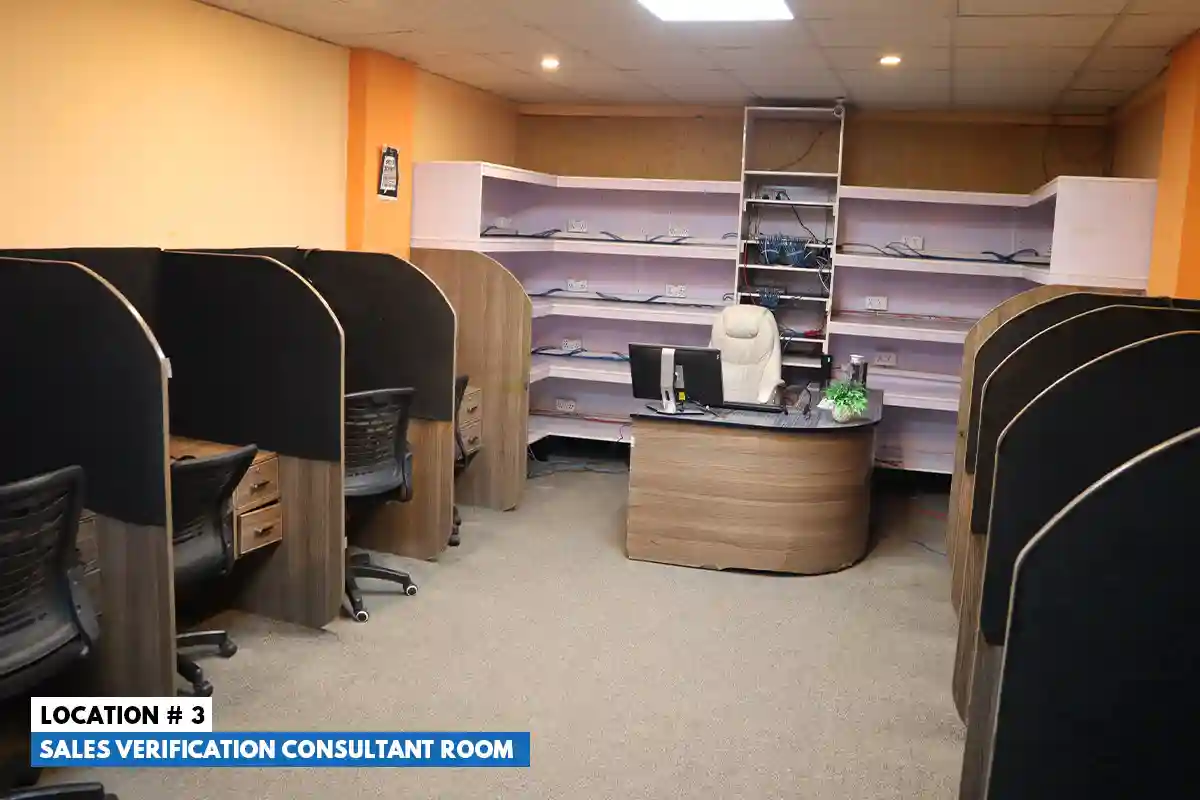
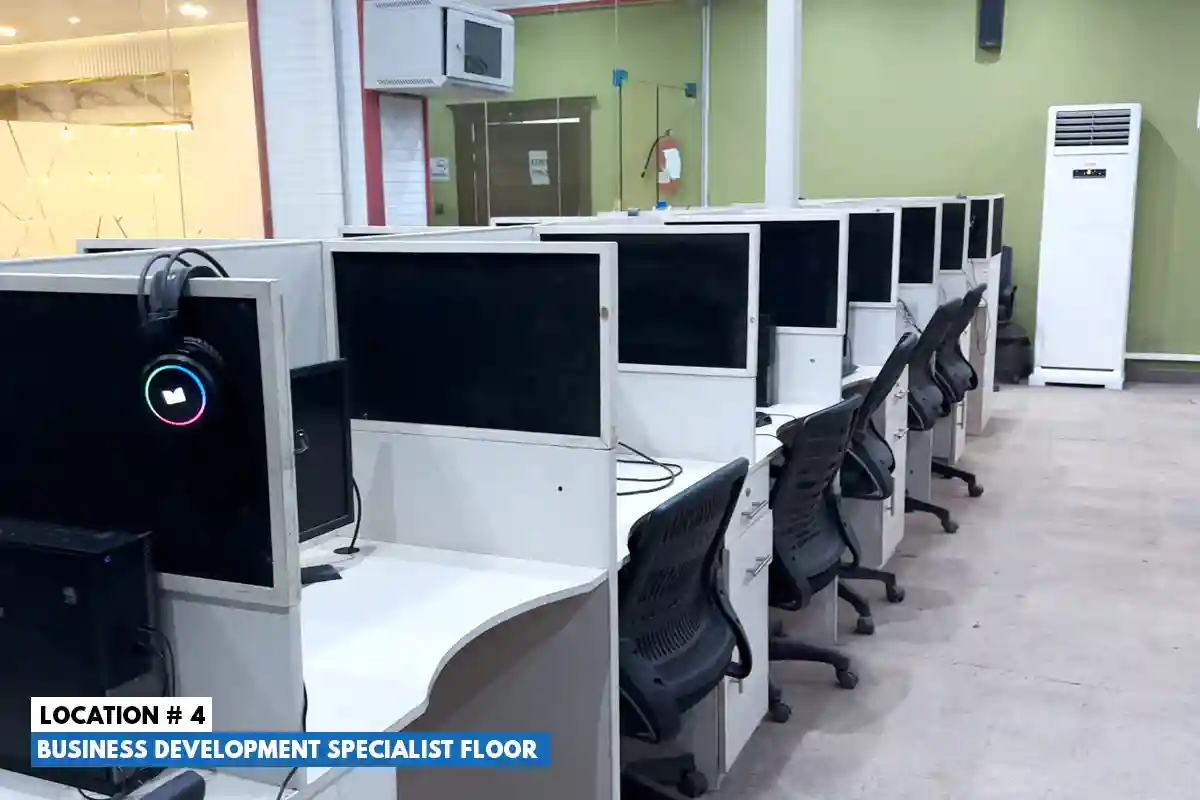
Prime BPO is a business process outsourcing company with six offices in Rawalpindi, Pakistan, serving clients in Pakistan and the USA. Its data entry services and back-office operations services help businesses handle data entry, document processing, and record management. A typical engagement:
- Scope the work: document types, volumes, systems, accuracy targets, and turnaround.
- Agree on security: access method, confidentiality terms, and any compliance requirements.
- Run a trial on a sample batch and review results together.
- Launch with a dedicated team or per-task pricing.
- Report and improve: regular accuracy and turnaround reports, with process changes as needed.
See also our remote back-office support guide.
Conclusion:
Data entry outsourcing lets you move repetitive, rules-based work to a team built for it, often at a fraction of in-house cost. The providers worth choosing are the ones that can prove accuracy on your own documents, protect your data with controls you can verify, and report results clearly.
|
Your situation |
Best approach |
|
One-time backlog or data migration |
Project-based or per-record pricing |
|
Ongoing invoices, forms, or orders |
Dedicated offshore team with an accuracy SLA |
|
Healthcare data with PHI |
Provider willing to sign a HIPAA business associate agreement |
|
Data must stay in the US |
US onshore agency or in-house |
|
Large product catalog |
Per-SKU pricing with a trial batch |
|
Small, occasional tasks |
Freelancer or small hourly engagement |
|
Unsure about accuracy |
Start with a measured trial before committing |
Streamline Your Back Office with Prime BPO
If manual data work is slowing down your team, Prime BPO can take it on, from data entry and document processing to back-office support, for businesses in Pakistan and the USA.
- Request a custom data management proposal from Prime BPO
- Explore Prime BPO data entry outsourcing services
- Call +92-51-8733177 to discuss your project
Frequently Asked Questions
What is data entry outsourcing?
Data entry outsourcing is hiring an outside provider to enter, extract, verify, clean, and update your business data, such as invoices, forms, product listings, patient records, or CRM entries. The provider works to your rules, accuracy targets, and deadlines, usually at lower cost than in-house staff, especially when the team is offshore.
How to know if a data entry job is legit?
A legitimate employer won't charge you for training, equipment, or "starter kits," won't send you a check and ask you to send part of it back, and won't ask you to reship packages. Be wary of promises of high pay for little work. The FTC advises searching the company's name with words like "scam" or "complaint" before accepting and reporting suspected scams at ReportFraud.ftc.gov.
Can you freelance data entry?
Yes. Many people do data entry as freelancers through online platforms, and businesses use freelancers for small, short projects. For ongoing, high-volume, or sensitive work, many companies prefer a managed provider with supervision, quality checks, backup staff, and contractual security controls.
Which is the best company for data entry?
The best company is the one that proves accuracy on your own documents, protects your data with controls you can verify, works in your systems, and prices clearly. Compare providers with a trial batch, ask for written accuracy and turnaround commitments, and check which security certifications they actually hold.
How much does data entry outsourcing cost?
Outsource Accelerator's 2026 benchmarks put offshore rates at about $4 to $9 an hour (India and the Philippines), US agencies at $15 to $20, and US in-house operators at $18 to $25. Per-record pricing is also common, such as about $0.35 per SKU for product listings.
Sources and 2026 Verification
Sources were opened on November 4, 2026.
- Outsource Accelerator, Data entry: 2026 pricing benchmarks by country, per-page and per-SKU examples.
- HHS, Sample business associate agreement provisions: business associate definition and required BAA terms.
- FTC, Job scams: warning signs and reporting.
Pricing figures are industry benchmarks, not quotes; actual costs depend on volume, complexity, accuracy targets, and security requirements. This article is general information, not legal or compliance advice.