
There are so many business call centers that are choosing the software after watching any polished demo or any comparing prices. Once the system is in use then they discover the routing issues, poor CRM integration, also the limited reporting and the do not match how their teams actually work. Fixing all those problems can be very expensive later and very time wasting.
Choosing the wrong inbound call center software affects more than your agents. It leads to longer wait times and repeat conversations.
This guide will explain what to look for in 2026 also compares the leading options and highlights the features that matters most before you invest in a new platform or you are outsourcing your customer support.

What Is Inbound Call Center Software and What Should It Actually Do?
Inbound call center software means that you are managing the incoming customer calls, routes them to the right agent, and then gives agents the customer context they need before picking up, and tracks every interaction for performance review. That is the baseline.
In 2026, the baseline has expanded. According to Gartner, over 75 percent of contact centers will move to the cloud platforms by 2026, and McKinsey reports that the companies improving customer experience through better call handling can increase the revenue by 10 to 15 percent. That is the business case for choosing the right platform, not just any platform.
The important features that separates functional software from great software are IVR that is interactive voice response for self service routing, ACD (automatic call distribution) for skill-based queue management, real-time analytics dashboards, CRM integration so agents see customer history during the call, and call recording for QA. Anything beyond that is either valuable or unnecessary depending on your operation's scale.
The 5 Must-Have Features in Any Inbound Call Center Software Solution
These are the features that are the ones that directly affect call outcomes. If a platform you are evaluating is weak on any of these, then the gap will show up in your CSAT scores.
-
Skill-Based Routing
The calls should reach the agent who is most qualified to handle them, not just whoever is next in the line. Skill based routing matches the incoming calls to agents and that is based on their expertise, language, or product knowledge. Without it, first call resolution rates can drop and average handle time climbs.
-
IVR with Self-Service Options
A well designed IVR reduces the agent workload by resolving very common queries before a human picks up. The best platforms in 2026 allow no code IVR design, ,means that your operations team can update call flows without a developer.
-
Real-Time Queue Analytics
Supervisors need live visibility into wait times, agent availability, and call volume spikes. A dashboard that updates every 30 seconds is not real-time. It is a lag indicator. Look for platforms with sub-second queue data.
-
CRM Integration
When the agent picks up a call and already knows the customer's name, last issue, and account status, then the entire interaction changes. When CRM data appears during a call, then agents can see past purchases, previous issues, and account status immediately, which reduces the repeat questions and shortens call time. Make this non negotiable.
-
Call Recording and QA Tools
Every customer interaction is a training data point. Call recording with searchable transcripts and scoring templates is what separates BPOs with consistently strong agents from those stuck in ongoing performance chaos.
Get Free Quotes
Customized Options Await
Best Inbound Call Center Software in 2026: Platform Comparison

No single platform is right for every operation. Here is an honest breakdown of what the leading platforms do well and where they fall short.
2026 Inbound Call Center Software Comparison
|
Platform |
Best For |
Starting Price |
Key Strength |
Key Limitation |
|
Aircall |
SMBs and growing teams |
$30 / user / month |
Ultra-fast setup, highly intuitive user interface, deep out-of-the-box CRM integrations |
Lacks advanced workforce management tools needed for large enterprise volumes |
|
Dialpad |
AI-powered contact centers |
Custom enterprise pricing |
Built-in real-time transcriptions, live sentiment analysis, and instant agent AI coaching |
Advanced generative AI coaching features require moving to higher price tiers |
|
Five9 |
High-volume enterprise operations |
Custom enterprise pricing |
Exceptionally deep analytics engines and robust, customizable workflow automations |
Can be prohibitively expensive and overly complex for small or mid-sized teams |
|
Nextiva |
All-in-one communications |
$75 / user / month |
Merges traditional business unified communications (UCaaS) and contact center tools seamlessly |
Higher baseline entry cost compared to standalone contact center software |
|
Talkdesk |
Mid-market teams wanting no-code tools |
$75 / user / month |
Powerful no-code automated workflow builders and intuitive AI virtual agents |
Proprietary AI add-ons can increase your actual baseline seat costs by 20% to 60% |
|
Genesys Cloud CX |
Omnichannel enterprise scale |
Custom enterprise pricing |
Exceptional omnichannel routing (voice, SMS, chat, WhatsApp) and advanced voice analytics |
Standard outbound/inbound telephony carrier features are billed as separate add-on costs |
|
CloudTalk |
International operations and SMBs |
Custom pricing packages |
Massive international reach with localized virtual numbers across 160+ countries |
Mobile applications require rigorous testing to ensure stability on older hardware |




















How Inbound Call Center Software Connects to Outsourcing and Sales Operations
Software alone is not a strategy. This is the part most comparisons miss entirely.
Inbound call center software is the infrastructure layer that is making outsourced operations scalable and consistent. When a BPO handles the inbound support or sales for a global client, then the software manages routing logic, compliance recording, and CRM sync across every agent regardless of location. Without strong software, a BPO delivering consistent CSAT scores across 100 agents working different shifts is an operational impossibility.
For direct sales operations running inbound campaigns, the software connects the caller's data to the agent's screen in real time. An inbound lead that arrives with full call history, product interest context, and account status does not need to re-explain anything. That context is what converts inquiry calls into closed sales. The agent is not starting cold. They are continuing a conversation.
The contact center software market sits at $85 billion in 2026 and is shifting from voice-only telephony toward generative AI orchestration. Modern buyers are building stacks that pair an AI voice platform for tier-1 calls with a smaller human team for escalations, instead of paying for 200 BPO seats around the clock.
See how Prime BPO structures inbound campaigns for maximum conversion and CSAT performance
That shift matters for anyone building or upgrading an inbound operation. The best software today is not the one with the most features. It is the one that reduces the friction between a caller's problem and a resolution, whether that resolution is human or automated.

How to Choose the Right Platform for Your Team Size
The right platform depends almost entirely on your scale and what you are trying to accomplish operationally.
Platform Selection by Team Size and Use Case
|
Team Size |
Recommended Starting Point |
Why |
|
Under 10 agents |
Aircall or CloudTalk |
Quick implementation times, affordable entry-level pricing, and straightforward routing setups that don't require an IT team. |
|
10 to 50 agents |
Dialpad or Talkdesk |
Delivers sophisticated AI assistants and highly flexible call flow adjustments without needing complex custom development. |
|
50 to 200 agents |
Five9 or Nextiva |
Built to handle fluctuating mid-market volume while providing deeper supervisor monitoring and workforce management tools. |
|
200+ agents |
Genesys Cloud CX or Five9 Enterprise |
Unmatched omnichannel capabilities, enterprise-grade data compliance certifications, and highly customizable routing logic. |
|
BPO with international clients |
CloudTalk or Genesys |
Broad multi-country coverage options with reliable international telephony connections and localization tools. |
Building the Operation Around the Right Stack
Software is the foundation. But software without trained agents, defined routing logic, and consistent QA review does not move the needle.
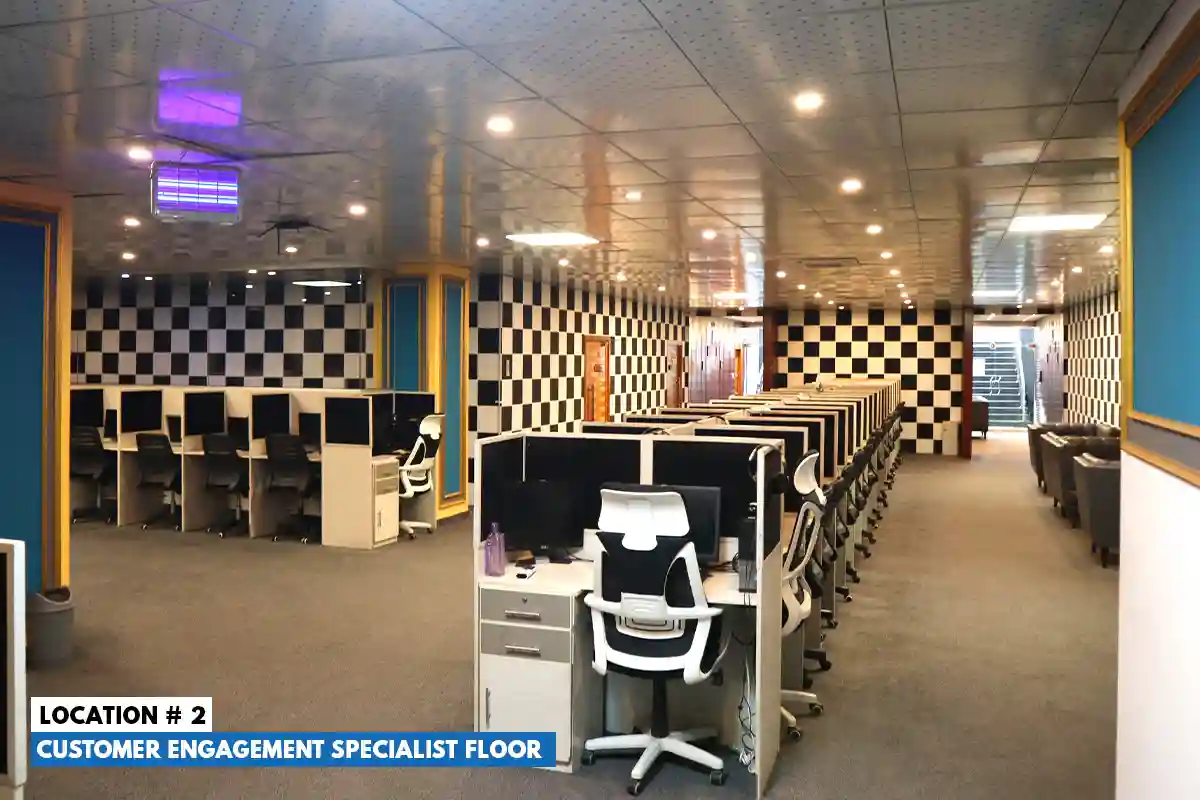
If you are building or scaling an inbound operation and want to understand how top-performing BPOs in Pakistan structure their software stack, agent training, and campaign workflows to deliver measurable results for international clients, Prime BPO works with teams across Karachi, Lahore, and Islamabad on exactly that.
No hard pitch. If you are at the stage of comparing software and want to understand how outsourcing and technology decisions interact in practice, it is a conversation worth having.
Get Free Quotes
Customized Options Await
FAQS
What software is used in call centers?
The call centers are using the Software and the software is our CRM systems, automatic on distributors, interactive voice response, dialers, call routing and analytical tools.
What is inbound software?
Inbound software will help the business to manage the incoming customer calls by routing the callers to the right agent, also tracking interactions and improving the response time.
What is inbound call tracking software?
Inbound call tracking software records in analyzing incoming calls, it's also his business to me at all source, monitor the agents performance and also improve the customer service.
What is an inbound call center?
An inbound call center can handle the incoming customer calls for the services such as technical support, order processing, billing questions, and general customer service.