

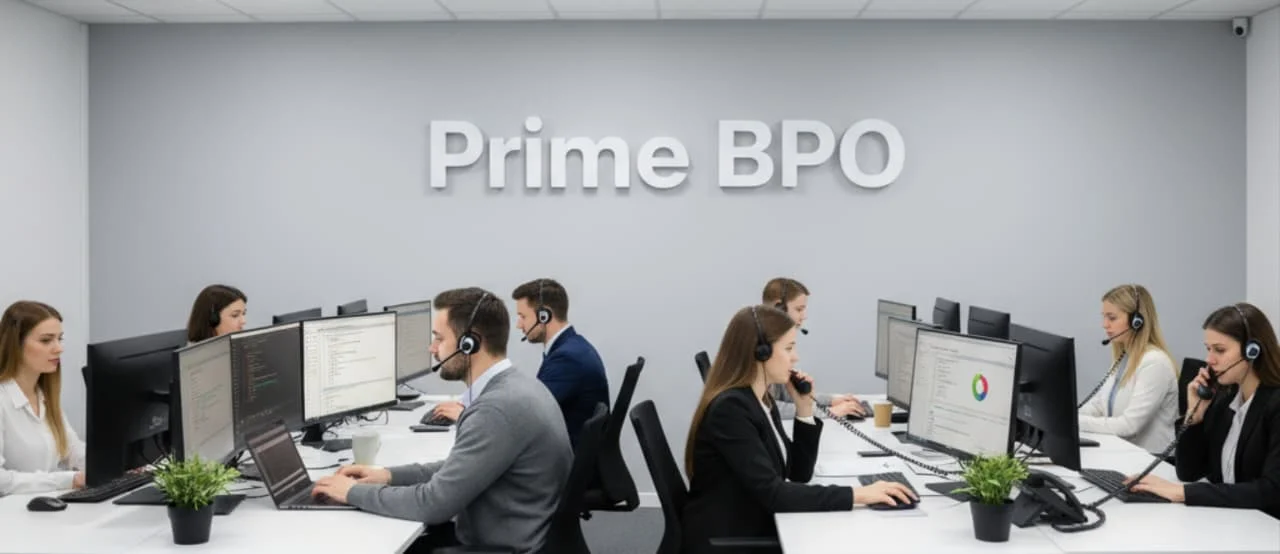
Outbound lead generation is the act of pro actively identifying and also contacting the potential customers before they come to you. Your team reaches out those customers through calls, emails, LinkedIn, or ads, rather than waiting for inbound traffic.
It is often written off as outdated. That is wrong. According to Salesforce's State of Sales 2024 report, 72% of the top-performing sales teams still rely on a mix of inbound and outbound, and outbound accounts for more than half of pipeline generation in B2B companies with the average deal sizes above $10,000.
The real problem is not outbound, it is outbound done without a system.
The Outbound Lead Gen Process, Step by Step
Understanding the process is way more important than picking the tactics. Without a clear process, even the best strategy produces inconsistent results.
|
Step |
What happens |
Common failure point |
|
ICP definition |
Define your ideal customer profile like industry, company size, role, pain point |
Targeting too broadly, wasting list budget |
|
List building |
Source verified contacts from tools like Apollo, ZoomInfo, or LinkedIn |
Stale data; 30% of B2B data decays annually |
|
Sequencing |
Build a multi-touch cadence: cold email → call → LinkedIn → follow-up |
Single-touch outreach with no follow-through |
|
Personalization |
Tailor the first line of every message to the prospect's specific context |
Mass-blast templates that get flagged as spam |
|
Qualification |
Use BANT or MEDDIC to confirm budget, need, and timeline |
Passing unqualified leads to closers, wasting their time |
|
Handoff |
Transfer a warm, context-rich lead to an account executive |
No context shared, AE starts from scratch |
|
Reporting |
Track reply rate, meeting rate, and pipeline attribution per channel |
No attribution = no learning = same mistakes next quarter |




































7 Outbound Lead Generation Strategies That Work in 2026
Not every channel delivers equal ROI. Here is where top teams are concentrating their efforts and what the numbers say about outbound lead generation.
- 8× Higher reply rate with personalized first lines vs. generic templates.
- 60% of the B2B buyers who say cold calls influenced their last purchase decision.
- 5–12 Touchpoints that are typically needed before a prospect agrees to a meeting.

Cold email with AI-assisted personalization
The cold email with assisted customization sends fewer emails, but makes each one very specific. Like a recent company announcement, a LinkedIn post, or a shared connection. Tools like Clay and Instantly now automate this personalization at scale, which explains why email is still the highest-volume outbound channel in 2026.
Outbound lead generation calling (warm and cold)
Cold calling is not dead, it has evolved. The most effective teams use call recording and also conversation intelligence like Gong, Chorus to identify the patterns in what gets callbacks. Calling prospects within 5 minutes of a trigger event like a content download, a pricing page visit that converts at 3× the rate of a random cold call.
LinkedIn outbound
LinkedIn's Sales Navigator filters let you target by the job change, company growth, and tech stack. Connection requests with a specific, non-pitchy message get accepted at a 30–40% rate for well-targeted ICPs. The important thing is to engage with their content first.
Account-based outreach (ABM)
Instead of spraying the hundreds of contacts, ABM focuses all energy on 50–200 high value accounts. Every message, ad, and call is mapped to one company. This approach is resource heavy but delivers the highest revenue-per-lead of any outbound method.
Outbound paid ads (demand generation)
Paid retargeting and intent-based advertising on LinkedIn and Google can reinforce the outbound sequences. If a prospect receives a cold email and then sees a relevant ad three times in the same week, then the reply rate on the follow-up email will be double. This is where outbound demand generation meets direct sales.
Get Free Quotes
Customized Options Await
Referral and warm introduction outreach
A warm intro converts at 5–10× the rate of cold outreach. Systematizing referral requests, building it into every closed-won deal review is one of the most underused outbound strategies in mid-market sales.
BPO-powered outbound calling at scale
For the high-volume prospecting, outbound sales BPO lead generation has become a prominent alternative to building a full in-house SDR team. Outsourced calling programs run 24/5 or 24/7, cover multiple time zones, and they can also be activated faster than the internal hiring.

In-House vs. Outbound Lead Generation Services: Which One Wins?
There is no universal answer but there is a framework that makes the decision even more easy for most teams.
|
Factor |
In-house SDR team |
Outbound lead generation service / BPO |
|
Ramp time |
3–6 months to hire and train |
2–4 weeks to launch |
|
Cost (monthly) |
$5,000–$12,000 per SDR (salary + tools) |
$2,000–$6,000 per seat |
|
Brand control |
Direct management |
Dependent on vendor quality and training |
|
Scalability |
Slow — hiring bottlenecks |
Add seats in days |
|
Best for |
Strategic enterprise accounts; complex sales |
High-volume prospecting; SMB markets; new territories |
|
Reporting visibility |
Full internal access |
Varies — require SLA-backed dashboards |
Most of the mature sales teams run both like an in-house team handles the strategic accounts and late-stage deals, while an outbound lead generation service handles top-of-funnel volume. This hybrid model will avoid the false choice between cost and control.

How Outbound Lead Generation Connects to Sales Operations and Customer Support
Outbound is not just a sales function, it touches every part of the revenue operations.
When an outbound SDR qualifies a lead, that lead must land in the CRM with complete context like the pain points surfaced, objections heard, decision timeline noted. Without this handoff, the account executives re-ask the same questions and prospects feel the friction immediately.
Customer support data is equally powerful. If your support team is logging repeat complaints about a competitor's pricing or reliability, that is live outbound ammunition. Teams that route support insights into outbound sequences see 20–35% higher connect rates because the pain points they reference are real and current.
Outbound marketing BPO providers that integrate with your CRM like Salesforce, HubSpot and pass enriched lead records, not just contact details are the ones worth paying for. Ask any vendor: what does the data handoff look like at the moment of qualification?
When to Outsource - and What to Look for in an Outbound Lead Gen Partner
Outsourcing the outbound lead generation process makes sense when your team cannot sustain the volume required, when you are entering a new market, or when internal SDRs are spending more than 40% of their time on research and list building instead of outreach.
The markers of a trustworthy outbound lead generation service are not in their pitch deck, instead they are in the questions they ask you. A strong partner will want to understand your ICP before building any list, will insist on a discovery call before quoting volume, and will show you historical reply rate data, not just "leads delivered" numbers.
Make sure to watch for vendors who promise volume without any qualification, who cannot describe what happens to a lead after it is "handed off," or who have no integration with your CRM. Those are the ones who generate a spreadsheet, call it a pipeline, and then they disappear.
Running outbound but not seeing the pipeline to show for it?
Prime BPO works with B2B sales teams who need outbound coverage without the cost and delay of building an internal team from scratch. If your SDRs are stretched, your response times are slipping, or you are entering a new market cold, the team at Prime BPO can help you build a qualified pipeline faster.
Get Free Quotes
Customized Options Await
FAQS
What is outbound lead generation?
How about generation is when you reach out to the customer first for example doing cold calls, called emails, messages or ads. Simply you start the conversation, not the customer.
What is the difference between inbound and outbound lead generation?
Inbound is for customers who come to you through websites, ads or content. The outbound is all about when you go to customers to call them, email and outreach.
What is an example of an outbound lead?
An outbound lead is someone you contacted first. For example you send a cold email to a business owner. They reply and show interest. The person becomes an outbound lead.
What is the difference between outbound and inbound?
Inbound the customer starts the contact and outbound the businesses start the contact. starts the contact and an outbound the businesses start the contact.